Background
- during WW2, social psychologist, Carl Hovland, was recruited by US defense force to uplift the morale of soldiers to continue fighting against japanese forces
- role he played in in bolstering morale of soldiers made SI an important area of inquiry
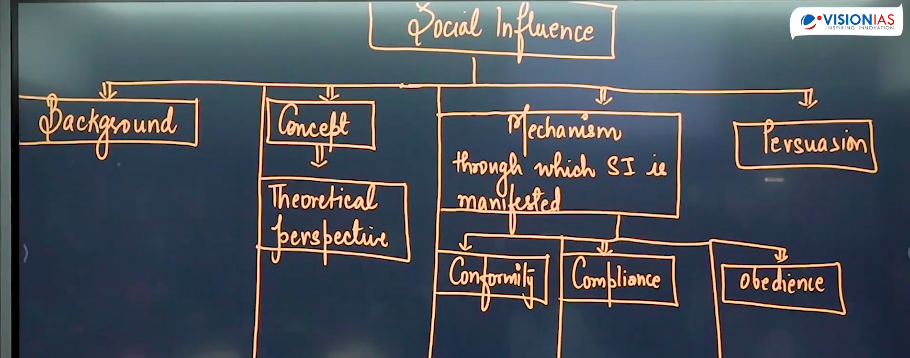
What is social influence
- a process thru which thoughts, attitudes, behaviour of individual/group undergoes change due to interaction with one or more ppl thru direct/indirect communication
- eg. COVID 19 caller tune, political slogan
- hoarding, billboards such as speed thrills but kills
- social media incfluencers through vlogs
- one can also influence via conduct eg following traffic rules
Theoretical perspective
-
French & Raven: SI can be brought about by application of social power
-
rewards power (incentive)
-
coercive power (fines)
-
expert power (doctor)
-
referent power (amitabh in polio, Vidya Balan in SBM)
-
legitimate power: BDO Malabika Khatua Ghatpatila
-
Q3. How you can use social influence to ensure the following? (30 Marks)
-
A. Promoting girl education. (10M/150 words).
-
B. Family planning (10M/150 words).
-
C. Prohibition of child marriage. (10M/150 words).
Mechanism through which SI is manifested
Conformity
- group influence in action
- Conformity: type of SI where individual agrees to change both A&B to fall in line w/ existing norms
Why do ppl conform?
- Normative SI
- ppl need to be liked by those whose acceptance we desire
- more importance to grp => more adherence to norms
- conformity ensured because fear of being rejected
- eg. participating cancel culture on social media
- culture of ragging, juvenile delinquency
- Informational SI
- to correct in one’s own judgement ppl conform to group
- more one is uncertain or lack experience, more they tend to go w/ group
- eg. vaccine hesitancy, historical importance
What are factors affecting conformity?
- numerical strength of group
- unanimity among group
- ideological similarity with group
Compliance
- making a request
- changing behaviour without changing the attitude
- eg. individual agrees to change their behaviour because of satisfaction derived due to acceptance of request
Principles of compliance (as per Robert Caldeni)
- liking friendships
- we comply w/ requests of those whom we like
- eg sports persons endorsing brand
- salesperson maintaining friendly rapport with customers because ppl more likely to buy from someone they like
- commitment & consistency
- once we committed to our position we are more willing to comply w/ request consistent to commitment
- eg. publicly pledging to support charity, they’re more likely to follow up
- reciprocity
- we comply w/ request if someone has complied with favour
- eg pol parties declaring job / vacancy before election
- social validation
- comply w/ request for action if action consistent with what we believe ppl similar to us are doing
- eg coaching institute displaying testimonials from selected candidates to influence aspirants
- pursuing career based on social validation
- scarcity
- ppl tend to secure scarce opportunity (FOMO)
- eg. only 10 items left at price
- authority
- willingness to comply with request from someone who has legitimate authority
- eg. doc recommendation carries more weight
Q4. What do you mean by social influence and how can you use it to convince the youth to become job generators rather than job seekers?
Techniques of Compliance
- foot in the door
- techniue of gaining compliance in which we begin w/ small request and when granted, we increase to larger one
- eg. SBM - govt went from ODF -> ODF+ -> ODF++ -> Water Plus -> Garbage cities
- eg. UCC
- amendment to Hindu Succession Act
- abolition of Triple Talaq
- changes in adoption laws under Juvenile Justice Act
- implementation of schemes on pilot basis
- Door in the face
- start with larger request, which we expect to be turned down
- retreat with smaller req (actual intention)
- eg salary negotiation
- grants by ministries
- bargaining w/ shopkeeper
- Thats not all technique
- Deadline technique
- target persons told they have limited time to take advantage of some offers
- eg. convince countries to develop alternate climate resilient tech
- reap demographic dividend, opportunity availble till 2041, use this technique to convince leadership to invest in social infra
- wrt old age population, govt should invest in silver economy so that it can be transformed into asset (i.e. longevity dividend)
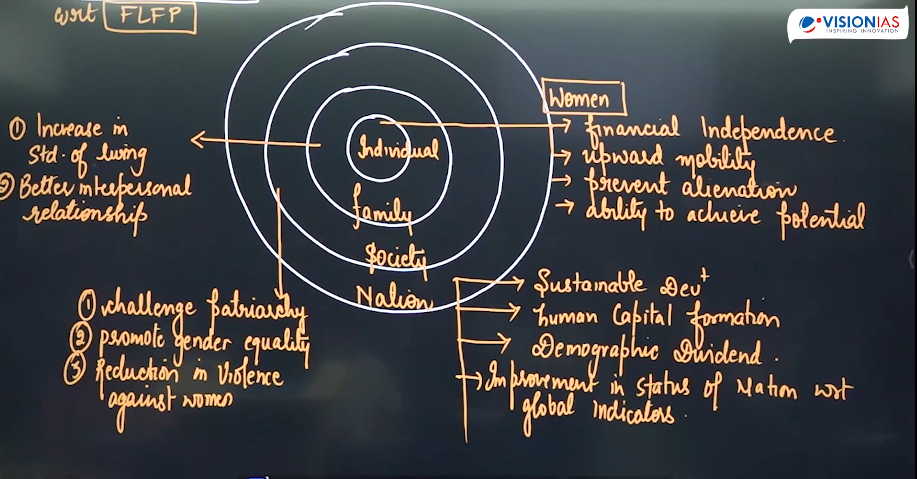
Q. How can you use social influence to convince the youth to actively participate in politics?
Obedience
- social influence in which individual takes orders from others to perform task
Why do ppl obey?
- visible badges
- degree, decorated uniform, car beacon
- socialized to always obey authority
- proximity w/ authority figures - ideological or physical proximity
- transfer of responsibility
- ppl view themselves not as individual but an instrument to carry out desires of others
- eg bystander apathy, destructive obedience (mob)
Destructive Obedience
- Stanley Milgram experiment, giving electric shocks
- reason
- transfer of responsibility
- gradual escalation of orders
- socialized to obey
- eg. State led persecution, nazi germany, jaillianwala bagh
Persuation
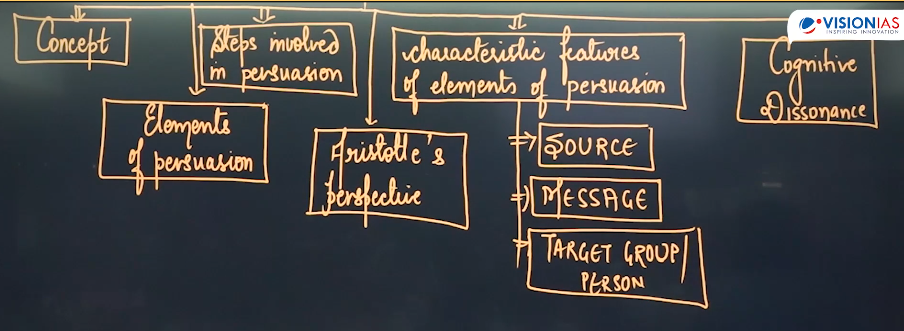
- type of SI in which person or group’s attitude/behaviour towards an object, idea or event is changed through direct communication
- eg. speeches at political rallies
- nukkad natak
- pictoral warning on cigarette packets
- movies with social message eg. Toilet
Q. Differentiate between social influence and persuasion. By giving one example from your life, illustrate how you brought about successful persuasion.
Elements of Persuasion
- who said, what, to whom, by what means
4 steps: (ACRA)
- attention
- to catch attention, message is presented in interesting manner, utilitarian, gerenate curiosity
- comprehension
- ability of source to make target group understand message designed taking into consideration the target group’s frame of reference
- retention
- target group should be able to retrieve message
- => msg needs to be repeated, salient features highlighted
- acceptance & action
- persuasion successful if target group not only receives msg, but also acts upon it
- eg. mid day meal persuades parents to send their kids to school
Aristotle
- Ethos: establish credibility/ethical appeal of speaker
- eg. known figure
- demonstrating mastery over subject
- person introduced by other established authority
- Logos: quoting data, facts, stats etc
- enhances ethos and makes speaker look knowledgable
- eg establishing historical analogies, constructing logical arguments, substantiating arguments w/ examples
- Pathos
- effective means of persuasion, esp when speaker and target group have same values
- used by evoking sympathy among target group towards speaker
- eg. using emotional tone, emotion evoking examples, or funny illustrations
Characteristics of element of persuasion
| Source | Message | Receiver |
|---|---|---|
| - credibility - attractiveness - power | - message discrepancy - fear appeal - drawing conclusion - sideness of msg - emotional & factual appeal - pleasant form of distraction - channel factor | - Selective exposure - selective interpretation & comprehension - intelligence |
Source
Credibility
- extent to which target group agrees with position advocated by source
- credibility ensured via trustworthiness, expertise
- lead to conformity
- sleeper effect
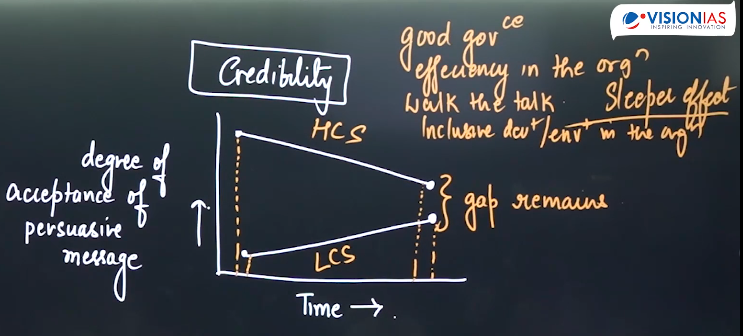
- over period of time, individual only remembers message but not person who issues message
- thus if source is highly credible, they should not give receiver time to think, but if source low credible, then give time to think
- highly credible source should reinforce credibility again and again
- good governance, walking the talk, inc efficiency
- wrt env conservation, if businessman decides to shut down industry, then despite being LCS, degree of acceptance of persuasive message inc
- hence LCS more successful in ensuring persuasion if they advocate against their fundamental interest
Attractiveness
- if target group finds src attractive, probability of accepting counter attitudinal message high
- attractiveness can be phy, communication skills, ideological similarity (most common)
- if attractiveness => lead to identification
Power
- ability of individual to enforce their will in collective action despite resistance of others
- reward, coercive, referent
- high compliance
Message
Message discrepancy
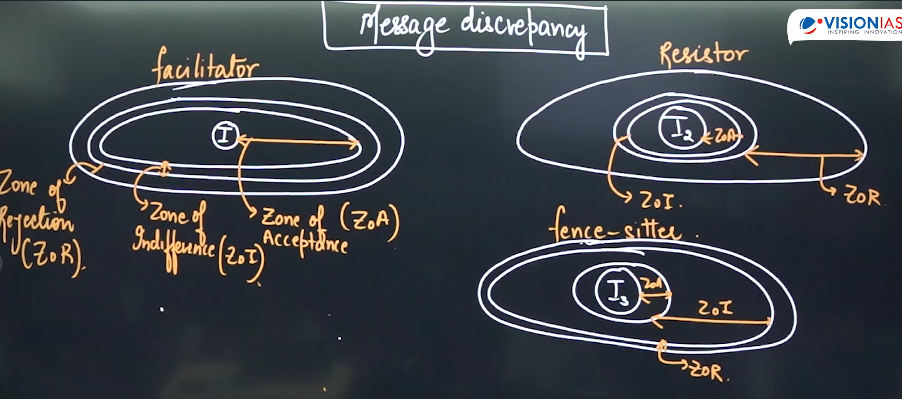
- facilitator: open minded, patient, tolerant, flexible, rational, compassionate
- resistor: stubborn, orthodox, status quoist
- fence-sitter: indecisive, lack of courage
To bring out successful persuasion, one should look for target group consisting of facilitators as they have wider zone of acceptance, discrepancy in message is underestimated and persuasion will be accepted. ZoA can further be widened in following ways
- choose source that is credible, attractive, powerful (CAP)
- make message interesting, utilitarian
- present message in culturally congruent manner
- eg. education in mother tongue, political speeches in local lang etc
Fear Appeal
- most common way of persuasion
- mild fear appeal better than strong, to prevent defense mechanism
Mild Fear
- persuading younger sibling to study hard by creating fear of failure
- application of karma theory
- creating situation of fear to bring desire for change (eg. disaster mock drilles)
- fear of growing old used by anti ageing products
Strong fear
- social boycott or honor killing w/ respect to intercaste marriage
- pictoral warning cigarette packets
- role of media during COVID19
- sometimes strong fear appeal works when source is highly credible, eg religious fundamentalist groups
Drawing conclusion
Works best when
- audience not very intelligent
- message not related to core belief of target group
- mutual trust b/w src & target
- message not structured
- drawing conclusion not be perceived as insult to target group intellect
Sideness of message
| 1 sided | 2 sided |
|---|---|
| no intellect | works when audience intelligent |
| not aware of other side | aware of other side |
| no hostility within source | hold counter attitudinal opinions |
| already agree to your position, you need to make them agree further | some hostility b/w src & target grp |
| eg. toothpaste ad | eg. sensitive issues eg. advertisement on health supplement |
Emotional & factual appeal
- documentaries
- cinema
- mukti carvan under bachpan bachao andolan by kailash satyarthi
- bezwada wilson safai karmchaari andolan
Pleasant form of distraction
- limited attn. span hence ppl resort to pleasant forms of distraction to increase effectiveness of persuasive appeal
- eg. food ,humor
Channel factors
- medium thru which info presentde
- be compatible w/ both message & frame of reference of target group
- eg . street plays to create awareness esp. among rural areas
- education in mother tongue
- covid 19 caller tune
Characteristics of receiver
selective exposure
- sometimes, receivers do not deliberately avoid persuasion but due to limited cultural educational exposure, they are exposed to only that information that happens to support their existing viewpoint
- eg. views regarding sexual DoL wrt racist slurs
Selective attention & comprehension
- even though source was able to overcome cultural barrier and reach target group, there is possibiity of selective attention & comprehension
- hence, problem of attention can be addressed by making the message interesting and comprehension can be addressed if proper eg are provided
Intelligence
- always advisabel to have intelligent target audience
- may be difficult to persuade them initially, but once they are persuaded w/ logical arguments, it will be long term persuasion