01 Intro + General
- Theory
- Ethics of human interface
- socialization
- attitude
- EI
- moral thinkers
- aptitude & foundational values in CS
- Application
- Ethics in PubAd
- Probity in gov
- Case Studies
IMP
keep adding examples
terminologies
examples from walks of life
- scriptures
- history
- leadership
- sports
- administrative official
Section A: 10m x 13q
Section B: 20m x 6q
Answer
Link to original
- Intro
- define keyword
- example
- premise/bg
- paradox
- quote
02 EIA
Aptitude
- specialized ability
- proficiency in specific area
- professional competence
- can be natural
- or potential to learn that skill
Intelligence vs Aptitude
- Intelligence: ability to gain knowledge
- Aptitude: ability to apply same knowledge
Without aptitude, individual = liability for org. However, if you have aptitude but not ethics, you are threat. Eg. Dr. APJ Abdul Kalam vs Dr. AQ KhanEthics
- prescriptive code of conduct for an actor in a situation wrt rightness or wrongness of an action
- eg. X commits henious offence but declared terminally ill. For a doctor, acc. to medical ethics, right thing is to save patient irrespective of criminal bg
Integrity
- When path of righteousness across time and space, it is integrity
- reliability in ethical conduct + uncompromising adherence to ethical princples
Features of persons with integrity
- Responsibility assumption
- eg. Dr. Satish Dhawan (ISRO chairman) took responsibility in 1975 when indian satellite launch vehicle faced failure
- LBS during a rail accident in his tenure took the moral responsibility and offered resignation
- Humble, down to earth
- Dr. APJ Abdul Kalam known for approachable nature + down to earth
- Honesty in all actions
- Ashok Khemka, TN Sheshan, Rajni Sekhri Sibal
- Sheshan: I cherish my rigid intention to integrity
- I am like a ball. The more you throw me on the ground, the higher I will rise.
- Think about other’s interest before personal
- eg. Ivan Anaya chose to give up opportunity of winning by pushing Abel Mutei to finish line
Impact of integrity on individual
Link to original
- satisfied life w/o sense of guilt
- credibility inc
- quick decision making due to easy resolution of dilemmas
- lack of fear => peace of mind
- clarity in vision (no digression from moral path)
- ensure spiritual growth
- enhance personality wrt desirable traits
- sacrifice is part and parcel of life. However, if a person lacks integrity, they might sacrifice their self respect, relationships, national interest etc
03 VAME
Value, attitude, moral, ethics
- mental construct used as instrument of behaviour regulation
- helps in
- guiding decision making
- influencing choices
- directing our behaviour
What is VAME made of?
VAME
Link to original Belief
- internal feeling that something is true, w/o proof
- mental conviction held by individual or grp
Features of belief
- inherently personal, vary from one person to another
- based on evidence, experience, teaching, intuition, superstition, culture, society, family
- influence behaviour, emotions, decision making process
- 2 types: core, peripheral
- both can be challenged, but core difficult to change
- core = long lasting, based on preferences called values
Belief Value Lying wrong honesty cheating immoral loyalty god created universe religiousnes women are weak, need care patriarchy Emotions
- bodily arousal which is reaction to an event, either internal or external
- emotions reflected through action and when expressed through appropriate action, it gives sense of relief
Behavioral tendency
- desire for action but doesn’t guarantee action
- eg. X believes corruption is root cause of all problems -> generates emotion (anger) but no guarantee he’ll be whistle blower
Characteristic features
Static vs Dynamic
- VAME source of identity
- investment wrt cost, time, energy, emotions
- thus not dynamic; its rather permanent
Change accommodated in following ways
- admitting different behaviour under same values
- eg. diff manifestations of patriarchy
- when sudden experience in life
- Samrat Ashoka post Kalinga War
- Angulimal and his interaction with Gautam Buddha
- Covid 19
- drastic change in env
- radicalization by anti social elements, social media
Culture specific vs universal
- values bind ppl together
- society survival requires stability and harmony
- pre-requisite for stability and harmony is value consensus
- hence some values are culture specific
West India Individualism Collectivism Competition Cooperation Secularization Strong religious orientation Consumerism Delayed gratification
- However, some values transcend boundary of society (are universal) eg love, compassion, happiness
- Compassion = empathy + desire for action
- empathy = imaginatively placing yourself in place of others to understand their emotional profile
- antipathy = negative value system towards others
- apathy = indifferent attitude
Absolute vs Relative
Absolute Relative Truth is truth, even if nobody speaks it Nothing is right or wrong for eternity if something is right, its always right in all contexts, hence no wrong way of doing right depends upon circumstances, society, culture, context eg. Robinhood not ethical, Kantian Ethics Eg. Euthanasia, Surrogacy, Live in Gautam Buddha: Being kind more imp than being right. Wrt. Newton Movie, lesson learnt was one shouldn’t take pride in duty that was expected when one joined the services.
Subjective vs Objective (wrt Individual)
Sujective Objective Value isn’t property of object, but perspective of subject value of object independent of subject Beauty lies in eyes of beholder plato -> beauty objective value eg. Live in, homosexuality, adoption, surrogacy, capital punishment Peace, discipline, integrity, compassion, happiness, duties Interrelationship b/w VAME
VAME interconnection
Link to original
- not every value can be seen in prism of right or wrong eg creativity, beauty, adventure, curiosity
- hence only those values which can be evaluated in light of right or wrong at individual => moral and collective => ethics
Ethics vs Morals
Parameters Ethics Morals Concepts What is right to do for an actor in situation standards of behaviour set by individual for himself source external/society internal/individual Why May lead to social boycott generate guilt, anxiety, remorse Flexibility collective preposition of society, more objective than morals highly subjective, varies from individual to individual Case Study: distribution under PDS only to Aadhar linked Ration Card. If family recently migrated, no link, genuinely starving?
- Administrative ethics
- deny ration as per rule
- morality
- provide ration despite lack of aadhar linkage to alleviate hunger of family
- provide support in linking
Crisis of Conscience
- Conscience: intuitive authoritative judgement wrt morality of action
crisis of conscience is a situation when
- you worry because you did something wrong
- confronted by ethical dilemmas (i.e. forced to choose action against your conscience eg Arjun)
- sense of guilt
- eg.
- Inertia to appear as witness in criminal case
- employee discovering illegal activities within company; CoC as not able to decide whether to report and risk job + relationship or stay silent to protect his career
- IAS; peaceful protest (constitutional right), but order from snr to disperse crowd
- Dr. Savita’s medical termination of pregnancy case
- to overcame CoC, require wisdom, courage, integrity
- Conscience is like a dog, which can never bite, but never stops barking.
Being ethical is sine qua non for maintaining social cohesion.
Source of Ethics
- ONE OF THE SOURCE of ethics = NORMS
- Norms = informal guidelines wrt behaviour of individual
- agreed upon by societal members, binding on all individual
- can be referred as societal expectaions
- eg. folding hands to greet, touching feet of elder, caste endogamy
- tool for social control to ensure conformity and uniformity and check deviance
- any digression from existing norms might lead to social boycott / ostracization
- higher stage of evolution of norms is laws
Laws and ethics
- answers what is the right thing to do
- can have multiple answers depending on source of ethics
- Hence need for minimum enforceable standard of behaviour common to all = laws
What are laws?
Link to original
- external set of standards wrt behaviour of individual imposed by appropriate authority based on ethical framework
- obj = ensure social order by controlling immoral behaviour
- societal sanctions, hence plays significant role in smooth functioning of society
- ethics = moral compass when law silent
- first line of defence against disapproved behaviour, whereas laws are remedial and reactive
ethics compass
Link to original
04 Ethics TODO
Link to original
04 Socialization
Concept
- process by which child is inducted into culture of society
- process by which values are transmitted from one gen to another
Mechanism
- observation learning
- rewards & punishments
- role taking
- trail & error
Agencies
- family
- edu system
- peer group
- media
- religion
Mechanisms
Observation learning
- learning by watching others
- thru social role models eg parents teacher, friend
- eg reflection of parents’ behaviour on children, hero/idol worship
- addiction among children wrt gadgets
Rewards & punishments
- attaching rewards/punishments to different actions of individuals
- glorification of disapproved behaviour has led to creation of morally corrupt society
- sanskritization of corruption is concept by kashik basu, where ppl blindly imitate culture of corruption to improve economic status in society and it exists due to lack of punishment given to corrupt ppl
Role taking
- imagining and visualizing oneself as someone else and acting like them
- individual able to understand feelings of others
- eg. Initiative taken in Ghatpatila by Malbika Khatua (BDO) wrt SBM
- Rang de Basanti movie
- children participating in plays on 26 jan or 15 aug for patriotism
Trial and error
- learn through experiences
- Chanakya: Life is too short to learn from your own mistakes, hence wise person is one who learns from mistakes of others
Agencies of socialization
Family
- informal
- imp role in ensuring value concensus by socializing children in formative years wrt value system of soc
- values: kindness, love, sacrifice, delayed gratification
Style of parenting
- Autocratic
- parents impose value system
- restrict autonomy of children
- power distance large
- child either too compliant or too hostile
- values:
- Complaint: lack of courage, responsibility assumption, confidence, inability to make decision
- Hostile: hypocritical, self centred, identifying with anti social elements high
- Democratic
- communication characterized by rationality
- rel based on mutual trust, respect, openness, receptivity to feedback
- parents exhibit patience and tolerance
- +ve reinforcement of display of desirable behaviour
- values:
- rationality, flexibility, confidence, patience
- Permissive
- too much freedom
- incompatible with physical survival of child
- apathy, neglect, lack of courage, isolation, intimidation
Mohd Yunus: Tech is value neutral. Whether it is boon or bane depends on use of it.
Education
Role of Mother
Secure
- mothering is consistent
- rel. b/w mother & child characterized by mutual trust of respect
- mothers act as rational role model of children
- values: rationality, courage, wisdom, achievement
- Abraham Lincon: Who I am today and whatever I will be tomorrow I owe this to my angel mother.
- TODO: prepare 5 personalities who’s mother played imp role
Insecure
- mother inpervious to need of chield
- neglect, apathy
- excessive indulgence
- values:
- display of bold behaviour
- lack of rationality
- apathy, indifference
- delinquent behaviour
Role of Father
- socialization by both father & mother extremely imp for development of child, esp in first 1000 days
- values: responsibility, dedication, timeliness, leadership, decision making
- boys learn gender appropriate behaviour
- girls learn to make heterosexual adjustments from father
- eg. role of father in Phogat sisters, Gunjan Saxena
Education as agency of socialization
- formal agency of socialization
- platform for children to interact with those who are NOT family
- link b/w family & society and prepared children for role in adulthood
- values: confidence, courage, brotherhood, achievement, orientation, tolerance
- role of:
- teachers
- content
- co-curricular activities
Role of teachers
- role model
- influence value system in most impressionable age
- observation learning, conditioning, role taking to socialize the child
Influence in socialization
- correcting stereotype through unbiased treatment
- however, even teacher can be biased
- eg. beating child due to caste discrimantion
- judging someone’s character based on gender
- influences pattern of self attribution
- eg. child largely perceived themselves depending upon kind of socialization provided by teachers
- hence one should never attach any label to any individual as it is difficult to dissociate from them
- influence value system of children by walking the talk
- commitment, hardwork, compassion, punctuality, patience
- positively influence learning outcome of child by promoting activity based learning
- Benjamin Franklin: “You tell me, I’ll forget. You teach me, I may remember. You involve me, I will learn.” (NEP: concept of experiential learning)
- role of chanakya in life of chandragupta maurya
- savitribai puhle, wrt girl edu
- ramakant archrekar wrt Sachin Tendulkar
- late Sampat Kumar, in life of Mitali Raj: “A teacher is one who dreams your dream and helps you turn them into reality.”
Q. “If a country is to be corruption-free, and become a nation of beautiful minds, I strongly feel there are three key societal members who can make the difference - Father, Mother and Teacher.” - Dr. APJ Abdul Kalam. What do you mean by the statement? Discuss with examples.
Role of Content
- content be driven by scientific temper w/o any ideological coloration
- eg. fairy tales glorify ‘damsel in distress’ image
- elementary school, stories glorify sexual DoL
- illustrating fair as beautiful, ugly as dark
- Karnataka introducing gender neutral images in textbooks to challenge traditional gender roles
- culture specific inputs should be given so that they facilitate integration of child into cultural fabric of society
- eg. elementary education in mother tongue
- vocational training at primary level (NEP 2020)
- inculcating values through storytelling from respective cultures
- convergence between text and context to promote application based learning
- outcome based learning be promoted
- 360 degree holistic assessment to ensure development of critical thinking, emotional intelligence, social skills
- self assessment, P2P assessment, teacher student assessment etc
- Pratham ASER every year highlights poor learning outcomes
Role of co-curricular activities
- values: communication skills, confidence, humility, cooperation, sportsmanship, leadership, courage for risks, responsibility assumption, tolerance, time mgmt, never give up attitude
- shapes personality in comprehensive manner
- society culture however, doesn’t promote co curricular activities, hence attitudinal change is need of hour
Q. “Education in what remains after one has forgotten what one has learnt in school.” What do you mean by statement? Discuss with examples.
Value Based Education
- generalized preferences enabling us to lead certain kind of life
- developed through process of socialization
- one of the agencies of socialization is education
- inculcate wisdom (knowledge + morality), courage, justice, tolerance, integrity
- Aristotle: educating the mind w/o educating the heart is no education at all
- GandhiJi: literary education is of no use if it fails to build a sound character
- CS Lewis: education w/o values no matter how useful it is, tends to create a clever devil
Role of Peer Group
- interaction among co-equals
- extremely imp during adolescence, especially in absence of democratic parenting
- minimal power distance
- shape life goals, occupational goals, behavioral patters
- if negative, lead to anticipatory socialization
- indulge in disapproved behaviour
- consumerism, bullying, gaming disorder
- due to lack of experience, may not be able to give right guidance, hence gap needs to be filled by other agencies of socialization
Role of media
- Neither bow & arrow not sword do you require; publish a newspaper when faced with canon fire.
- channel of communication that helps in disseminating ideas, information, education, entertainment
- different types of media
- print media
- broadcasting media
- social media
- outdoor media
Influences process of socialization in following manner:
- topic for discussion
- awareness about issues eg. UCC, violence against women
- platform for 3D
- deliberation, debate, dissent
- enable citizen to develop holistic perspective on any issue
- shaping beliefs, attitude, behaviour, thru cinema
- objectification, commodification of women through cinema
- fair and lovely advertisement
- glorification of negative character
- eg. bike theft post release of Dhoom
- normalization/ trivialization of criminal activity, through cinema (adultery, abusive relationship, toxic masculinitiy)
- What society obscures, cinema reflects.
- vicarious reinforcement (does it reward psychophants or integrity driven ppl?)
- determines destiny of any nation
- thus, should act as fourth pillar of democracy in both letter and spirit
Social Media Impact
Positive impact
- social capital => unity in diversity
- bring to light malpractices (eg. Adarsh Srivastava prevented girls in train traffik)
- grow cultural capital (awareness)
- participative, informed, active citizenry
- economic empowerment (creation of job)
- compassion (crowdfunding)
- democratization of culture
- information dissemination
- equality of opportunity, concerning edu availability, accessibility and affordability
- platform for creative expression
- vocal for local (eg. local brands using social media to advertize)
- social tolerance
- address social isolation, anxiety, esp. during COVID
- mobilization of masses for social cause
- sensitization of public, concerning issues like UCC, homosexuality, LGBTQ rights etc
Negative impact
- -ve impact on phy, mental health
- early digital presence leads to early attainment of mobile maturity age
- youth radicalization
- anonimity => divergent activity, eg. trolling, cyberbullying, deepfake
- echo chamber, one sided accentuation of reality, holistic perspective not developed
- procrastination
- emotionally charged divisive content, amplification
- impacts peace and harmony
- behavioral addiction to social media => lack of focus, anxiety, restlessness
- outsourced identity to technology
- seek validation from others concerning identity
- relative deprivation -> crime
- instant gratification
- FOMO
- depersonalization of social relationships (eg. celebrating imp days in virtual world rather than the real)
- self alienation
- media trials, privacy threats, westernization, promotion of secondary lifestyle
- -ve impact to cognitive development of individual
- hyper-relation (living in your own disneyland)
- objectification & commodification of individuals
- commercial exploitation of children via reels, vlogs
Political impact
Positive
- voice to voiceless
- platform for constructive dissent
- link b/w govt, citizen, estb. legitimacy of govt
- platform to provide policy inputs to govt
- drawing attention of govt towards issues overlooked by them
- transparency, accountability, overall good governance
Negative impact
- fake news
- paid propaganda
- hate speech
- manipulate voter behaviour
- aggravating identity politics
- polarization of youth based on ideology
Religion as agent of socialisation
- unified system of belief and practices related to sacred things which binds people into one single moral community
Role of religion
- harmony, solidarity, collectivism by rituals, ceremony, festival
- functional jointness in family despite sturctural disintegration
- sense of belongingness
- ethical dilemmas
- courage to manage misery, frustration
- accept life as divinely pre destined
- answering unanswered questions
- eg. proliferation of godmen, spiritual leaders etc even among upwardly mobile professional class, matters of life/death
- religious teachings shape goals of individual life
TODO: prepare contemporary relevance of teachings of buddhism, jain, sikh, etc
Bhagawad Gita
- Sthithpragnya (emotianal stability)
- needed in backdrop of growing anxiety, stress, anger, hate speech, intolerance, road rage
- Nishkam Karma
- enables individual to remain motivated in backdrop of increasing competition and pressure to be successful
- prioritize right over pleasure
- eg. corruption
- mcdonaldization of food habits
- consumerism
- addiction to gadgets
- endurance amidst adversity (never give up)
- eg. Yuvraj Singh
- Arunima Sinha: first amputee to climb everest
- J K Rowling
- savitri bai pule
- value your blessing
- always be grateful for what you have become because comparison is enemy of all happiness
- relevant in backdrop of social media penetration
- being good is the reward in itself
- end in itself, not a means
- cultivating honesty, kindness, integrity
- negative attitude is root cause of all problems
TODO: contemporary relevance of Gandhi’s 7 sins
Link to original
05 Attitude
Q. W/ example of a leader, how has he influenced you
- readiness of psyche to act or react in a situation
- opinion/perspective of attitude holder towards attitude object
- shaped through process of socialization over the years 📆
- never formed in vacuum
- it is a +ve or -ve evaluation of attitude objects
- long lasting
- subjective because depends upon individual
- ambivalent: co-existence of both +ve & -ve attitude simultaneously
- held because they perform some function for individual
- always communicated either verbally or non verbally
- quotations on t shirt
- WhatsApp status
- Insta bio
- conforms to principle of consistency
https://t.me/smritishah_visionias
Components of attitude
components of attitude
Link to original Prejudice
- Negative attitude towards a particular group
- based on stereotype
- negative stereotype creates prejudice
- often associated w/ emotions of hate & anger
Prejudice may get translated into discrimination. However, behavioral component can be controlled by law.
Throughout the history, there have been neutral examples:
- apartheid in South Africa 🌍
- racial prejudice
- persecution of Jews during Nazi Germany 🇩🇪
- ethnicity
- untouchability in India 🇮🇳
- caste based
- discrimination faced by LGBTQ community 🏳️🌈
- gender identity & sexual orientation
Kalpana Saroj: dalit + woman
Strategies to be adopted to address cognitive and affective component
- Knowing root cause of development of prejudice
- eg. image of Africans in cinema
- prejudice against women (patriarchy)
- Efforts should be made to correct prejudice
- through education, cultural integration
- eg. NE Students
- Bezbaruah Committee: use sports to integrate NE into national discourse
- Facilitate direct communication b/w diff groups
- community lunches to dilute inter caste prejudice
- Discourage -ve behaviour among victims of prejudice which reinforces prejudice
- De-emphasizing narrow social identity based on in-group
- in-group is the group from which one choose their identity
Voltaire
Prejudice is what fools use to reason.
ingroupism
Link to original There exist various kinds of prejudices in the context of Indian society. Discuss the factors that have resulted in the formation of those prejudices and enumerate the measures that can be taken to correct those prejudices.
Functions of attitude
Acc to Daniel Katz, Attitudes are held as they perform certain functions - eg - need fn, knowledge, ego defensive, value
functions of attitude
Link to original Need function
- satisfy needs, Utilitarian function
- hence to change attitude, either the need should change or an alternative attitude requires that further serves existing need
Need Function
- X develops a favorable attitude towards risk-taking in their career because it fulfills the need for personal growth, innovation, and desire to achieve higher success levels
- A person might have a strong attitude towards saving money and being financially responsible, as it fulfills the need for security and stability
Knowledge function
- helps to organize and interpret diverse set of info
- Understanding Function
- may not provide factually correct picture
- picture only gives individual power to understand cause of event
- Hence, to change attitude, we need to provide counter attitudinal information sustainably
Example: Knowledge Function
- X has developed an attitude that girls are not good with maths which serves as a framework for understanding the low representation of women in technical fields
Ego defensive
- helps enhance our self esteem & defend ourselves against various arrows of life
- aka prejudiced attitudes which we often use to uplift our self image
- prevents us from acknowledging basic truths about ourselves
- eg.
- blame culture
- domestic violence
- son of soil theory
- can lead to Whataboutism
Example: Ego Defensive Function
- a person might downplay the health risk associated with smoking because acknowledging those risks might threaten their self-image
- Some individuals might deny the severity of climate change because accepting the reality would generate feelings of guilt
Whataboutism
- When someone confronted about their actions or actions of their identifying group, they defend their ego by shifting focus away from their actions
- difficult to change
- because stems from individual’s personality
- we must provide conducive env where individual given unconditional +ve regard & agree to lower their defences
Value expressive function
- helps promote self esteem or exercise impression mgmt
- helps communicate who we are
- and what makes us feel good
- because we are able to express our identity
- can only be changed when either:
- value system itself has changed
- alternative attitude can express existing value better
Example: Value Expressive Function
- If X is an employer and values freedom, he would express his values of loving freedom by encouraging:
- flexible work schedule
- constructive criticism
- ensuring participative management
- Status on social media, quotations on T-shirts, and conduct
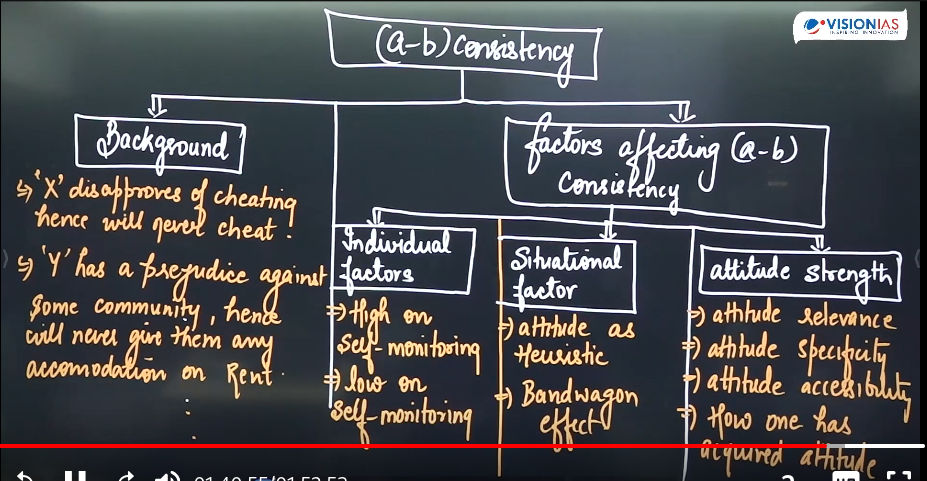
Attitude behaviour consistency
Background
- Corey Study 1937: as per study, concluded that whether a person cheats or not, depends NOT on attitude towards cheating, but on how poorly one has performed in exam
- hence, behaviour may not always be consistent w/ attitude
- Lapierre Study 1934: establish racial bias concerning chinese ppl in USA
- however, concluded that behaviour not always consistent w/ attitude
Factors affecting AB Consistency
Individual
- high on self monitoring
- diff situation, w/ diff ppl, act like diff person
- good at adapting to situation, hence promote interpersonal harmony
- however, many consider them as fake
- low on self monitoring
- behaviour expression of true feeling
- rigid, may not be able to present themself in socially desirable manner
Situational Factor
Attitude as heuristic
- when info overload
- no time to plan or contemplate behaviour
- in such cases we act as per out attitude => high AB Consistency
- eg. brand impact on behaviour
Band wagon effect (herd mentality)
- if we hold a group in high regard and their attitude is different, AB consistency is less, since we adapt our attitude with theirs
- eg. obsession with english language
- voting behaviour
- persistence of social evils
- untouchability
- child marriage
- dowry
Attitude Relevance
- depends on relevance of attitude object for attitude holder
- eg. blood donation and consistency w/ behaviour depends on who requires blood
Attitude Specificity
- specific attitude stronger than general attitude
- eg. when person is religious or how often they visit shrines
- if one prefers cleanliness or one’s opinion regarding construction of household toilets
Attitude acessibility
- the moment attitude holder is exposed to attitude object & if attitude is immediately accessible then it is strong and consistent w/ behaviour
- eg. attitude related to social issues can be +ve, -ve, ambivalent
- ambivalent -> one might enjoy sensation of smoking despite acknowledging it is injurious to health
- X believes reservation strengthens democracy, however also believes its politicization creates conflict
How has one acquired the attitude
- if attitude due to direct exposure to attitude object, then strong
- eg. attitude of victims concerning social evils
What factors affect the formation of a person's attitude toward social problems? In our society, contrasting attitudes are prevalent in many social problems. What contrasting attitudes do you notice about the caste system in our society? How do you explain the existence of these contrasting attitudes? (10 Marks/150 words).
Types of Attitude
- positive or negative
- democratic & bureaucratic
- moral & political
Positive attitude
When attitude of individual such that they always focus on good in other ppl or situations, events, ideas, etc referred to as positive attitude
Characteristic features
- optimistic
- always focus on opportunities rather than challenges eg. Thomas Edison
- problem solving approach eg. Dr. Satish Dhawan
- achieve long term goals since they exhibit values of patience & perseverance eg. Nelson Mandela
- never blame others for misery eg. Sandeep Singh, Arunima Sinha
- never gave up in situations of adversity eg. Mahatma Gandhi
Democratic & Bureaucratic Attitude
Bureaucratic Democratic attitude of an individual where basis of decision making is written rules, regulations attitude such that they encourage participative decision making - rigid
- top down / centralized
- objectivity
- impersonality
- rule orientation- flexilbe
- bottom up / decentralized
- humanistic orientation
- fluid communication
- participitative- quick decision making
- easy resolution of dilemma
- legitimacy
- uniformity
- lack of bias
- less possibility of favoritism
- easy to hold accountable
- rationality
- precedence for future decision making- ppl focal pt. of decision making
- inclusive decision making
- better acceptance & internalization of decisions
- better evaluation of decisions due to constructive feedback
- flexible
- grounds for innovation
- efficiency- apathy
- red tapism
- status quoist
- blind rationality - over obsession w/ rules to the extent of displacement of goals
- one size fits all
- policy paralisys
- trained incapacity
- self alienation / prostitution of personality
- transfer of responsibility
- crisis of conscience- time consuming
- difficulty in arriving at consensus
- uninformed participation
- difficulty to hold accountability
- “collective interest” might promote elite interest
- in reality, blend needed
- when framing SOP, one can have bureaucratic attitude, however application be democratic
- in normal course of events, be democratic, but in emergency, be bureucratic
- target audience educated, then democratic, else bureaucratic
Moral Attitude
- attitude of individual which is based on moral conviction wrt right and wrong
Features
- based on righteousness
- denotes our belief about morality
- attitude towards moral lapses
- behaviour when confronted w/ ethical dilemmas
Sources
- moral attitude is shaped through socialization
- imp agencies:
- family
- education
- religion
Features of persons w/ moral attitude
- Reverence
- respectful towards others
- eg. tolerant of dissent, differing opinion
- abiding by provision of constitution
- Faithfulness
- never cheating in any relationship
- professional (bribe)
- personal (infidelity)
- Awareness of responsibility
- citizens aware wrt duty to vote in elections
- parents aware wrt desirable socialization to children
- officers aware to ensure efficient service delivery
- Veracity
- observing the truth
- esp. in backdrop of fake news, paid news, propaganda, post truth era
- POST TRUTH: era or period where ppl opinion shaped not by facts but their belief & emotions
- Goodness
- broadly encompasses character of person consisting of following qualities
- kindness
- generosity
- compassion
Political Attitude
- attitude towards political leaders, parties, public issues
- based on political losses & gains
- determines how individuals choose to behave during elections, respond to policy-making
Factors shaping political attitude
Link to original
- charismatic personality of leader
- ideological proximity
- agencies of socialization
- family
- friends
- work colleagues
- influenced also by media, social media
- policy making, extent to which development is ensured
- according to Rajni Kothari, influenced by 2 factors
- caste
- religion
- class position of individual
- have nots will prefer welfare govt
- demographic factor
- age
- older ppl less open to change
- gender
- role of women increasing
- election manifestos
- inc status of nation on global platform
- security concerns
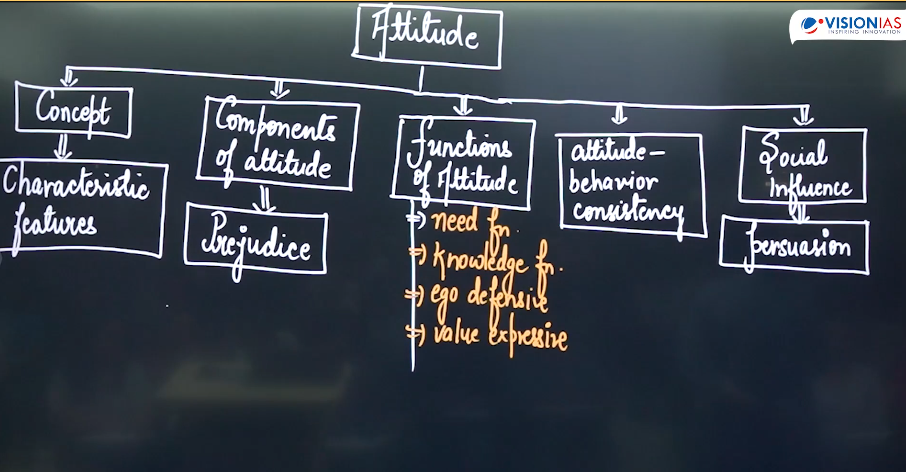
06 Social Influence
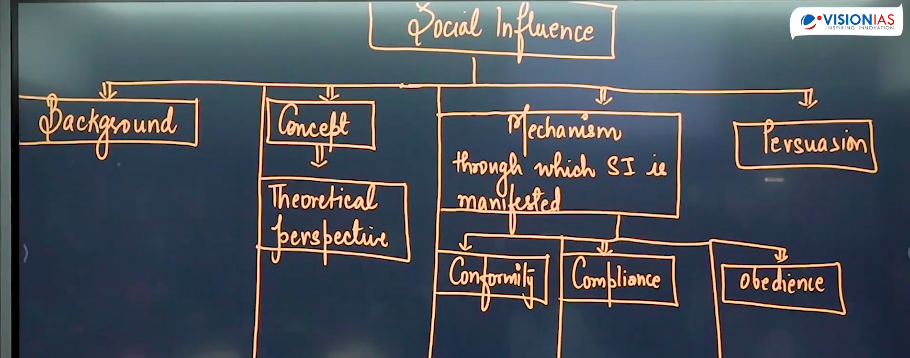
Background
- during WW2, social psychologist, Carl Hovland, was recruited by US defense force to uplift the morale of soldiers to continue fighting against japanese forces
- role he played in in bolstering morale of soldiers made SI an important area of inquiry
What is social influence
- a process thru which thoughts, attitudes, behaviour of individual/group undergoes change due to interaction with one or more ppl thru direct/indirect communication
- eg. COVID 19 caller tune, political slogan
- hoarding, billboards such as speed thrills but kills
- social media incfluencers through vlogs
- one can also influence via conduct eg following traffic rules
Theoretical perspective
French & Raven: SI can be brought about by application of social power
rewards power (incentive)
coercive power (fines)
expert power (doctor)
referent power (amitabh in polio, Vidya Balan in SBM)
legitimate power: BDO Malabika Khatua Ghatpatila
Q3. How you can use social influence to ensure the following? (30 Marks)
A. Promoting girl education. (10M/150 words).
B. Family planning (10M/150 words).
C. Prohibition of child marriage. (10M/150 words).
Mechanism through which SI is manifested
Conformity
- group influence in action
- Conformity: type of SI where individual agrees to change both A&B to fall in line w/ existing norms
Why do ppl conform?
- Normative SI
- ppl need to be liked by those whose acceptance we desire
- more importance to grp => more adherence to norms
- conformity ensured because fear of being rejected
- eg. participating cancel culture on social media
- culture of ragging, juvenile delinquency
- Informational SI
- to correct in one’s own judgement ppl conform to group
- more one is uncertain or lack experience, more they tend to go w/ group
- eg. vaccine hesitancy, historical importance
What are factors affecting conformity?
- numerical strength of group
- unanimity among group
- ideological similarity with group
Compliance
- making a request
- changing behaviour without changing the attitude
- eg. individual agrees to change their behaviour because of satisfaction derived due to acceptance of request
Principles of compliance (as per Robert Caldeni)
- liking friendships
- we comply w/ requests of those whom we like
- eg sports persons endorsing brand
- salesperson maintaining friendly rapport with customers because ppl more likely to buy from someone they like
- commitment & consistency
- once we committed to our position we are more willing to comply w/ request consistent to commitment
- eg. publicly pledging to support charity, they’re more likely to follow up
- reciprocity
- we comply w/ request if someone has complied with favour
- eg pol parties declaring job / vacancy before election
- social validation
- comply w/ request for action if action consistent with what we believe ppl similar to us are doing
- eg coaching institute displaying testimonials from selected candidates to influence aspirants
- pursuing career based on social validation
- scarcity
- ppl tend to secure scarce opportunity (FOMO)
- eg. only 10 items left at price
- authority
- willingness to comply with request from someone who has legitimate authority
- eg. doc recommendation carries more weight
Q4. What do you mean by social influence and how can you use it to convince the youth to become job generators rather than job seekers?
Techniques of Compliance
- foot in the door
- techniue of gaining compliance in which we begin w/ small request and when granted, we increase to larger one
- eg. SBM - govt went from ODF -> ODF+ -> ODF++ -> Water Plus -> Garbage cities
- eg. UCC
- amendment to Hindu Succession Act
- abolition of Triple Talaq
- changes in adoption laws under Juvenile Justice Act
- implementation of schemes on pilot basis
- Door in the face
- start with larger request, which we expect to be turned down
- retreat with smaller req (actual intention)
- eg salary negotiation
- grants by ministries
- bargaining w/ shopkeeper
- Thats not all technique
- Deadline technique
- target persons told they have limited time to take advantage of some offers
- eg. convince countries to develop alternate climate resilient tech
- reap demographic dividend, opportunity availble till 2041, use this technique to convince leadership to invest in social infra
- wrt old age population, govt should invest in silver economy so that it can be transformed into asset (i.e. longevity dividend)
Q. How can you use social influence to convince the youth to actively participate in politics?
Obedience
- social influence in which individual takes orders from others to perform task
Why do ppl obey?
- visible badges
- degree, decorated uniform, car beacon
- socialized to always obey authority
- proximity w/ authority figures - ideological or physical proximity
- transfer of responsibility
- ppl view themselves not as individual but an instrument to carry out desires of others
- eg bystander apathy, destructive obedience (mob)
Destructive Obedience
- Stanley Milgram experiment, giving electric shocks
- reason
- transfer of responsibility
- gradual escalation of orders
- socialized to obey
- eg. State led persecution, nazi germany, jaillianwala bagh
Persuation
- type of SI in which person or group’s attitude/behaviour towards an object, idea or event is changed through direct communication
- eg. speeches at political rallies
- nukkad natak
- pictoral warning on cigarette packets
- movies with social message eg. Toilet
Q. Differentiate between social influence and persuasion. By giving one example from your life, illustrate how you brought about successful persuasion.
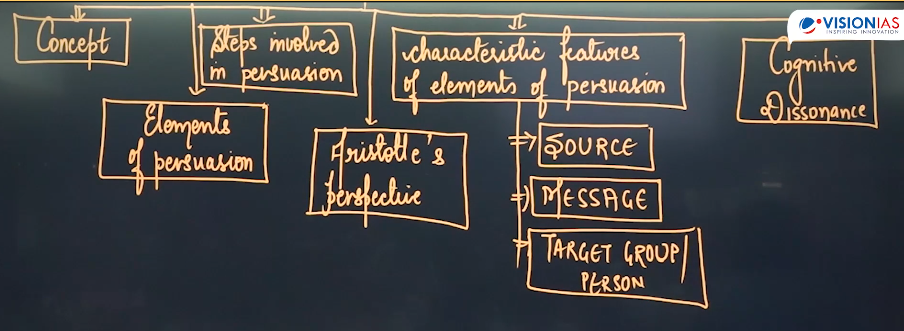
Elements of Persuasion
- who said, what, to whom, by what means
4 steps: (ACRA)
- attention
- to catch attention, message is presented in interesting manner, utilitarian, gerenate curiosity
- comprehension
- ability of source to make target group understand message designed taking into consideration the target group’s frame of reference
- retention
- target group should be able to retrieve message
- => msg needs to be repeated, salient features highlighted
- acceptance & action
- persuasion successful if target group not only receives msg, but also acts upon it
- eg. mid day meal persuades parents to send their kids to school
Aristotle
- Ethos: establish credibility/ethical appeal of speaker
- eg. known figure
- demonstrating mastery over subject
- person introduced by other established authority
- Logos: quoting data, facts, stats etc
- enhances ethos and makes speaker look knowledgable
- eg establishing historical analogies, constructing logical arguments, substantiating arguments w/ examples
- Pathos
- effective means of persuasion, esp when speaker and target group have same values
- used by evoking sympathy among target group towards speaker
- eg. using emotional tone, emotion evoking examples, or funny illustrations
Characteristics of element of persuasion
Source Message Receiver - credibility
- attractiveness
- power- message discrepancy
- fear appeal
- drawing conclusion
- sideness of msg
- emotional & factual appeal
- pleasant form of distraction
- channel factor- Selective exposure
- selective interpretation & comprehension
- intelligenceSource
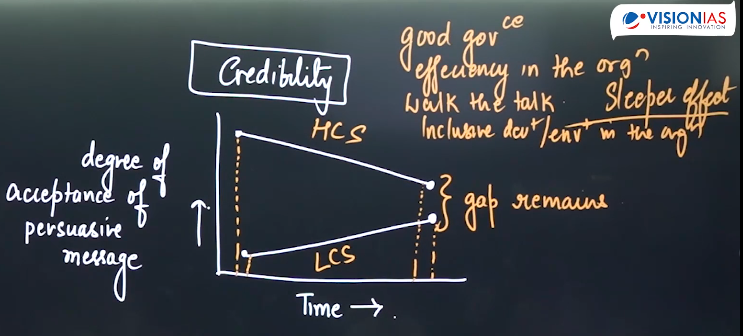
Credibility
- extent to which target group agrees with position advocated by source
- credibility ensured via trustworthiness, expertise
- lead to conformity
- sleeper effect
- over period of time, individual only remembers message but not person who issues message
- thus if source is highly credible, they should not give receiver time to think, but if source low credible, then give time to think
- highly credible source should reinforce credibility again and again
- good governance, walking the talk, inc efficiency
- wrt env conservation, if businessman decides to shut down industry, then despite being LCS, degree of acceptance of persuasive message inc
- hence LCS more successful in ensuring persuasion if they advocate against their fundamental interest
Attractiveness
- if target group finds src attractive, probability of accepting counter attitudinal message high
- attractiveness can be phy, communication skills, ideological similarity (most common)
- if attractiveness => lead to identification
Power
- ability of individual to enforce their will in collective action despite resistance of others
- reward, coercive, referent
- high compliance
Message
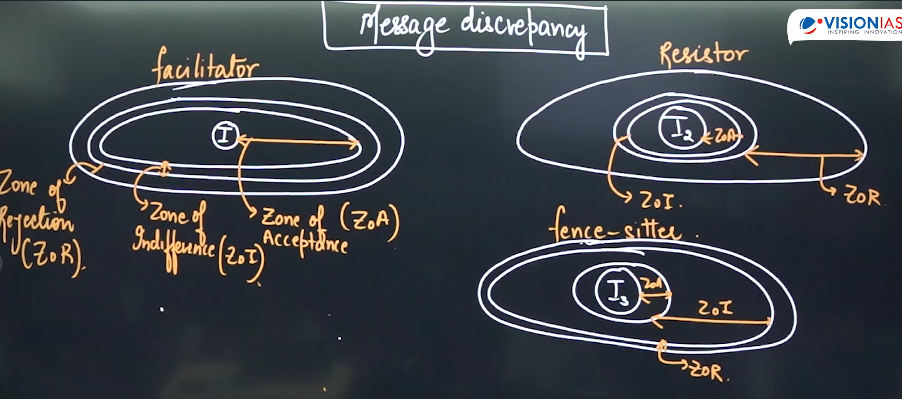
Message discrepancy
- facilitator: open minded, patient, tolerant, flexible, rational, compassionate
- resistor: stubborn, orthodox, status quoist
- fence-sitter: indecisive, lack of courage
To bring out successful persuasion, one should look for target group consisting of facilitators as they have wider zone of acceptance, discrepancy in message is underestimated and persuasion will be accepted. ZoA can further be widened in following ways
- choose source that is credible, attractive, powerful (CAP)
- make message interesting, utilitarian
- present message in culturally congruent manner
- eg. education in mother tongue, political speeches in local lang etc
Fear Appeal
- most common way of persuasion
- mild fear appeal better than strong, to prevent defense mechanism
Mild Fear
- persuading younger sibling to study hard by creating fear of failure
- application of karma theory
- creating situation of fear to bring desire for change (eg. disaster mock drilles)
- fear of growing old used by anti ageing products
Strong fear
- social boycott or honor killing w/ respect to intercaste marriage
- pictoral warning cigarette packets
- role of media during COVID19
- sometimes strong fear appeal works when source is highly credible, eg religious fundamentalist groups
Drawing conclusion
Works best when
- audience not very intelligent
- message not related to core belief of target group
- mutual trust b/w src & target
- message not structured
- drawing conclusion not be perceived as insult to target group intellect
Sideness of message
1 sided 2 sided no intellect works when audience intelligent not aware of other side aware of other side no hostility within source hold counter attitudinal opinions already agree to your position, you need to make them agree further some hostility b/w src & target grp eg. toothpaste ad eg. sensitive issues eg. advertisement on health supplement Emotional & factual appeal
- documentaries
- cinema
- mukti carvan under bachpan bachao andolan by kailash satyarthi
- bezwada wilson safai karmchaari andolan
Pleasant form of distraction
- limited attn. span hence ppl resort to pleasant forms of distraction to increase effectiveness of persuasive appeal
- eg. food ,humor
Channel factors
- medium thru which info presentde
- be compatible w/ both message & frame of reference of target group
- eg . street plays to create awareness esp. among rural areas
- education in mother tongue
- covid 19 caller tune
Characteristics of receiver
selective exposure
- sometimes, receivers do not deliberately avoid persuasion but due to limited cultural educational exposure, they are exposed to only that information that happens to support their existing viewpoint
- eg. views regarding sexual DoL wrt racist slurs
Selective attention & comprehension
- even though source was able to overcome cultural barrier and reach target group, there is possibiity of selective attention & comprehension
- hence, problem of attention can be addressed by making the message interesting and comprehension can be addressed if proper eg are provided
Intelligence
Link to original
- always advisabel to have intelligent target audience
- may be difficult to persuade them initially, but once they are persuaded w/ logical arguments, it will be long term persuasion
06.01 Cognitive Dissonance
- most influential theory in social psychology
- by Leon Festinger
- defined as situation of emotional or psychological discomfort due to discrepancy between thoughts and behaviour
Mechanism to resolve cognitive dissonance
- change the thought
- change behaviour
- add more thoughts to justify behaviour
- trivialize inconsistency
Q - Thousands of aspirants come to Delhi for UPSC preparation from every nook and corner of the country. Influenced by the metropolitan culture, some do get addicted to smoking. They have this thought in mind that smoking is injurious to health but still, the behavior of smoking continues. In such a situation, how to resolve the dilemma?
Q. What is the difference between cognitive dissonance and crisis of conscience? Explain by giving an example. (150 Words/ 10 Marks).
Link to original
99.01 Terminologies
Hatred
- feeling of extreme dislike towards something or someone
- disruptive of individual conscience and wisdom
- fear -> individual can be trapped in cycle of negativity
- avoid development of hatred thru desirable socialization
- if hatred developed, one should learn to manage it
Implications
- individual
- impacts phy + cognitive development of individual (peace of mind, happiness missing)
- Karma philosohpy: if you spread hate, you may face backlash sooner or later eg Hitler, Mussolini, Bin Laden
- society
- threat to peace & harmony
- aggravate social conflicts due to biasness (caste, religion, ethnicity) -> dilute social capital
- national
- goes against unity in diversity (national)
- public cost -> lack of resource availability, reduce investment in social infra -> threaten potential of demographic dividend
- intl.
- war like situation, affects involved nations + domino effect on other nations
Acc. Gautam Buddha, “Hatred is not seized by hatred, but only by love.”
Martin Luther King Jr., “I have decided to stick with love. Hate is too great a burden to bear.”
Link to original